
As detection tools struggle to keep up and reader bias distorts perception, AI scoring is creating more confusion than clarity.
A few weeks ago, Hachette pulled distribution of a previously self-published book called Shy Girl by authoress Mia Ballard, on the ground that it contained heavy AI usage that she had not disclosed to them. Thad Mcllroy, the well-respected publishing industry consultant who broke the story to the New York Times, gave us some background last week. Following a reddit hate storm (are you surprised?), accusations that Mia’s book was ‘ai-slop’ began to circulate, climaxing in a scathing review by youtuber, frankie’s shelf. Mcllroy commented that the AI detection tool Pangram analyzed the book and concluded that 78.4% of the book was AI generated. I’ve not read the book, but having listened to the youtube review, it was hard for me to understand what 78.4% means. Were 7 out of 10 words AI generated? That sounds terrible. But it didn’t tally with what I was seeing from the youtuber who just seemed to hate the book. Full disclosure, I know that’s not what the score means, but how many publishers, agents, authors or readers fully understand the score.
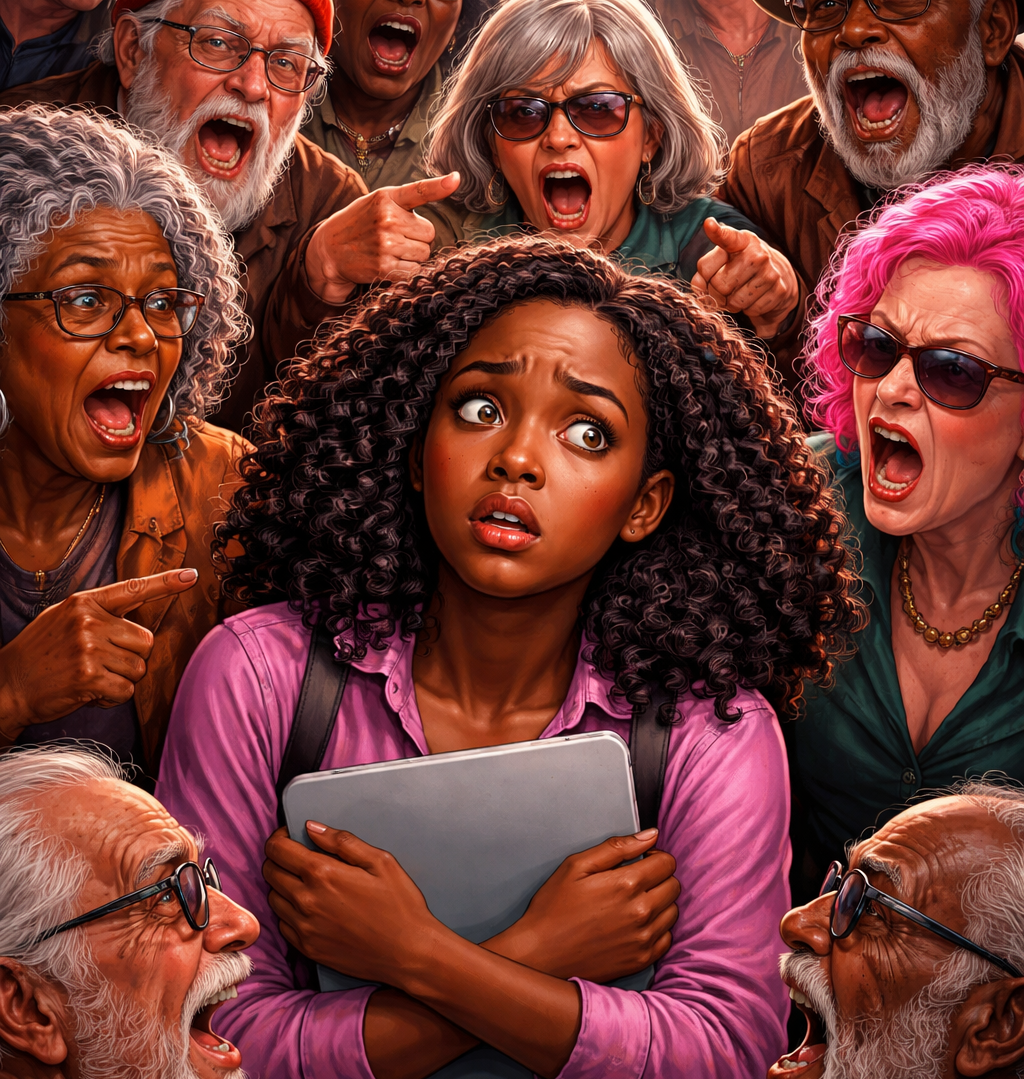
The NYT takedown is likely to be a career killer for Mia Ballard. Dr. Clementine Collett, a University of Cambridge GenAI and Creativity researcher concluded in an interview on the BBC world service that the Shy Girl hype proves how much authors and readers, seeking authenticity, want AI usage to be declared in a novel. While she may have data on readers’ opinions, I noticed that she only sites research evidence around author sentiment.
The Shy Girl scandal left me with 2 questions:
1) Do readers (not authors and publishers) care whether AI was used in a book or not?
2) What does it mean when an AI check concludes that 78% (or any percentage) of the book was AI generated?
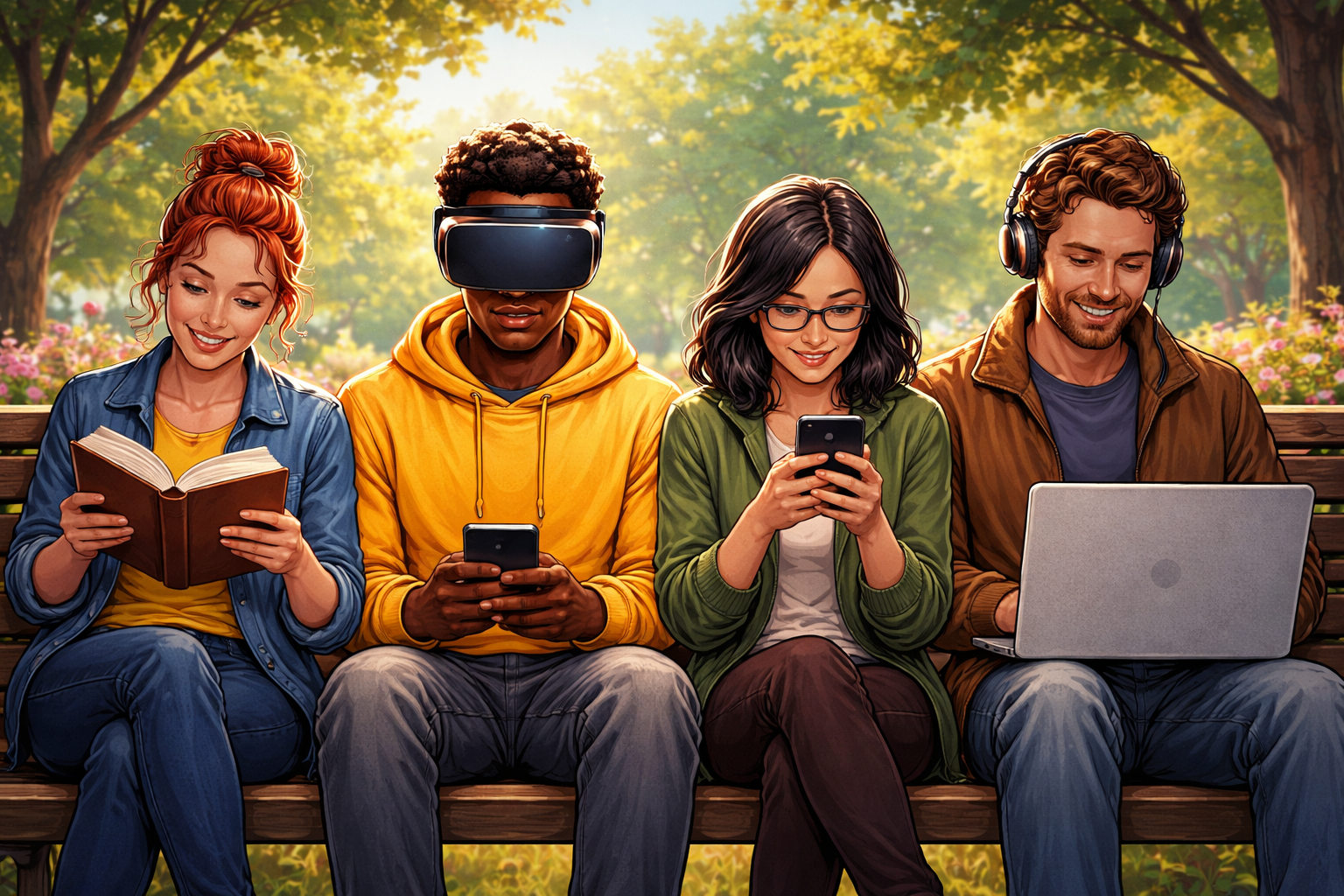
Do readers care if an author uses AI in their writing process?
The answer is – (EM dash) - It depends. Because the question needs to be more nuanced.
Readers seem to care, depending on the extend of AI usage, the genre, and the disclosure made.
Reader sentiment on the topic is scattered. The best available polling data I could find remains thin and methodologically uneven. The biggest sample sizes for tests conducted were relatively small and I am not certain as to their independence and diversity of opinions. With that said, lets proceed:
Extent of usage:
In an August 2025 poll and study by Yougov/Black Chateau, 28% of readers label AI usage as ‘Never acceptable’. More readers find it acceptable at various levels, with the majority accepting AI as a tool for line and copy editing. In a 2023 survey by the International Thriller Writers Association, readers displayed a strong aversion to AI-authored books, with a deliberate carve out for AI assisted spell checking and grammar. That said, humans often cannot reliably detect AI authorship, unless it has been specifically pointed out to them. This trajectory seems to be growing, especially as LLM models improve.
Genre:
Literary fiction readers stood out in the YouGov/ Black Chateaux poll as being the least tolerant of AI, with 54% stating they felt ‘much less fulfilled’ with AI generated text. When Fantasy author Lena McDonald accidentally left prompt instructions in her published book, readers were outraged, while Romance author KC Crowne, committed the same blunder and faced little pushback from her readers. A December 2005 study in Nature cites additional research showing that readers admitted to enjoying the AI-prompt assisted Romance and Science Fiction stories more than those written by humans. As a service provider to the literary publishing industry, I can testify that sci-fi authors are often the loudest AI misanthropes. Even more worrying to human authors, in a 2024 study by Brian Porter and Edouard Machery, where readers were asked to guess whether a poem was AI or human-generated, responders guessed incorrectly more often than not. AI poems scored higher than human ones in several quality categories.
AI-labelling:
The YouGov study revealed that 56% of readers wanted to be informed about all AI contributions, while 20% felt that, if AI contributions amounted to less than 10% of the book, no notification was necessary. Readers want the labelling because they want to feel like they paid for the effort and authenticity that went into the book. Unfortunately, humans are not fair judges, with readers rating the perceived quality of a non-AI generated text as lower merely because it was labelled as AI-generated. Simply discovering that a book was written by AI tended to reduce perceived reader fulfillment overall. In fact, when readers felt less transported by a story, they were more likely to attribute it to AI authorship, correctly or not. However, this bias against AI did not seem to stop the reader from continuing to read, whether AI or human generated.
The upshot: do readers care about AI usage and labelling
The majority of readers don’t mind authors using AI as part of their process, as long as it is limited to line/copy editing and research. Most readers wouldn’t be able to tell the difference between human and AI-generated books anyway, and are just as likely to enjoy them both. By, labelling work as ‘AI-enhanced’, great authors might be penalized, simply because readers have developed an irrational bias against the technology.

What does X% AI generated even mean
Large language models are evolving at a rapid pace. By contrast, most AI detection tools are not trained on the latest versions, making it difficult for them to reliably achieve the accuracy they claim.
There is also a strong and uneven “labelling effect.” When content is described as AI-generated, it is often judged more harshly. This occurs even in cases where detectors cannot confidently identify it as such. This suggests that transparency policies, while well-intentioned, can influence how quality is perceived, even when the underlying text is identical.
Looking ahead, the shift from simple prompting toward more personalized, author-specific fine-tuning is likely to make detection even harder. As models become more tailored and nuanced, both human reviewers and automated systems may find it increasingly difficult to distinguish between AI-generated and human-written content. Against this backdrop of growing uncertainty and shifting perceptions, the way AI detection results are presented takes on outsized importance.
AI checking software tends to give you a percentage AI-generated score, with some variation in presentation, depending on the vendor. A score of 100% AI-generated, will indicate to readers and publishers that a manuscript is ‘ai-slop’ to be avoided. But what about scores of 10% or 25%? What is the score range for a manuscript that was spell checked using AI? Does a moderately higher score indicate AI line-editing. And at what point, can a publisher be confident that the story was mostly written using AI?
There is little in the way of established frameworks to guide publishers in what they are and are not prepared to accept. And with a rapidly shifting environment in terms of ubiquitous AI adoption, with few legislative and commercially accepted principles around AI and copyright, it’s equally hard for publishers to match their editorial expectations with those of their stakeholders.
Conclusion
As things stand, informing readers and publishers that a manuscript scored 78% in an AI detection test is, on balance, better than nothing, but not by much. If we as an industry buckle to hysteria and paranoia, labelling content as X% AI-generated might create unanticipated challenges.